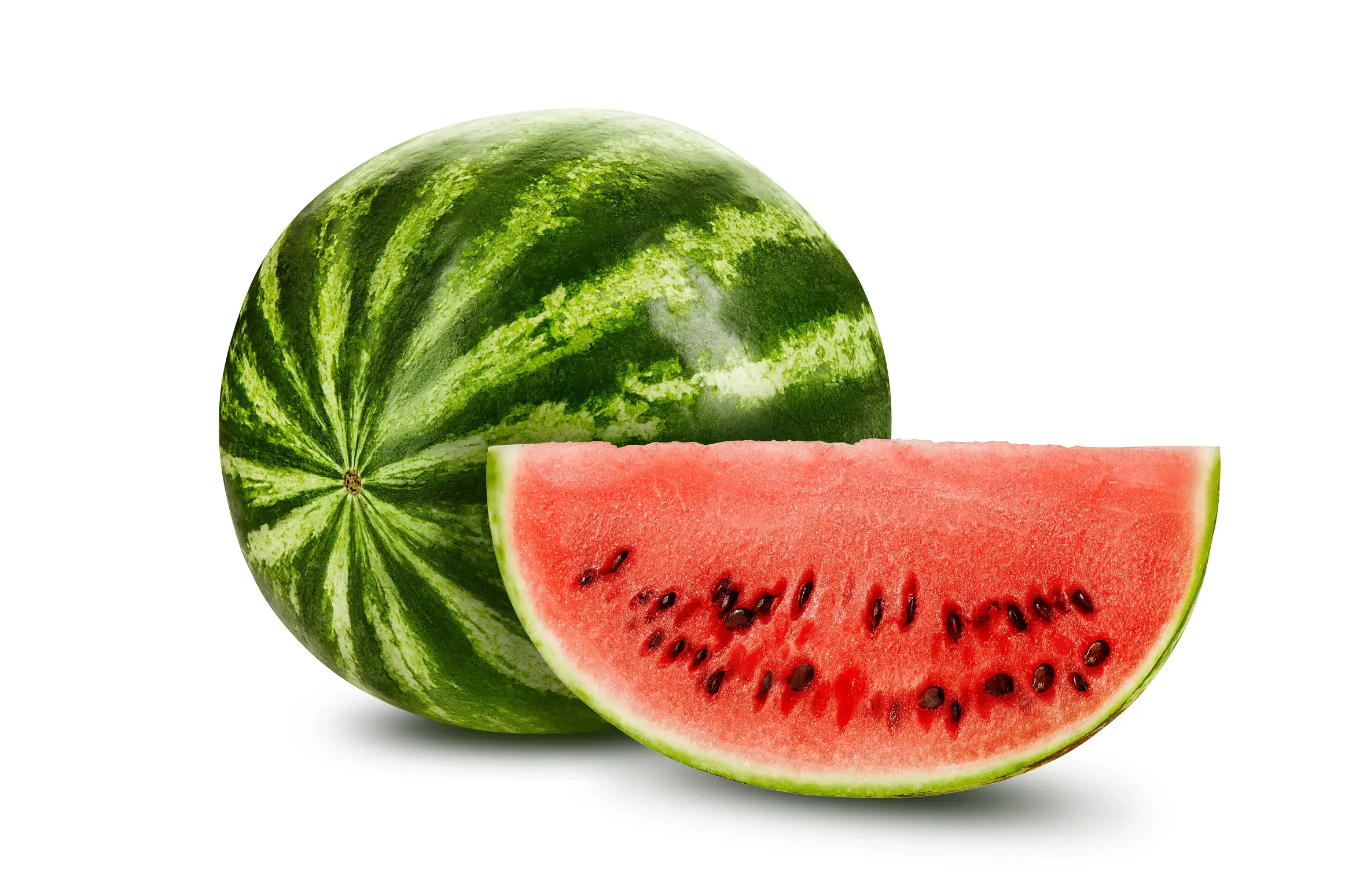
Watermelon and its Nutrician Facts

Watermelon is a refreshing and hydrating fruit that is widely enjoyed in India, especially during the summer months due to its high water content. Here are detailed nutrition facts about watermelon, focusing on the typical serving size of 100 grams:
1. Calories: Watermelon is relatively low in calories, making it a popular choice for those watching their calorie intake. On average, 100 grams of watermelon contains about 30 calories.
2. Water Content: As the name suggests, watermelon is rich in water, with a water content of approximately 91%. This high water content makes it hydrating and helps to quench thirst, especially in hot climates.
3. Carbohydrates: Watermelon is primarily composed of carbohydrates, mainly in the form of natural sugars. A 100-gram serving typically contains around 7.6 grams of carbohydrates.
4. Sugar: While watermelon does contain natural sugars, it is relatively low in sugar compared to many other fruits. A 100-gram serving of watermelon typically contains about 6.2 grams of sugar.
5. Fiber: Watermelon contains a small amount of dietary fiber, which is important for digestive health. A 100-gram serving typically provides around 0.4 grams of fiber.
6. Protein: Watermelon is not a significant source of protein, with only about 0.6 grams per 100-gram serving.
7. Vitamins and Minerals: While watermelon is not exceptionally high in most vitamins and minerals, it does contain some important nutrients, including:
– Vitamin C: Watermelon is a good source of vitamin C, with a 100-gram serving providing around 8.1 milligrams, which is about 14% of the recommended daily intake.
– Vitamin A: Watermelon contains beta-carotene, a precursor to vitamin A. A 100-gram serving typically provides around 569 international units (IU) of vitamin A.
– Potassium: Watermelon is a decent source of potassium, an essential mineral that helps regulate blood pressure and fluid balance. A 100-gram serving typically contains around 112 milligrams of potassium.
– Other nutrients: Watermelon also contains small amounts of other vitamins and minerals, including vitamin B6, vitamin B1 (thiamine), magnesium, and phosphorus.
8. Antioxidants: Watermelon contains various antioxidants, including lycopene, which is responsible for its red color. Lycopene is believed to have various health benefits, including reducing the risk of certain chronic diseases.
It’s important to note that the nutritional content of watermelon may vary slightly depending on factors such as variety, ripeness, and growing conditions. Additionally, while watermelon is a healthy and hydrating fruit, it’s essential to enjoy it as part of a balanced diet that includes a variety of fruits, vegetables, whole grains, and lean proteins.