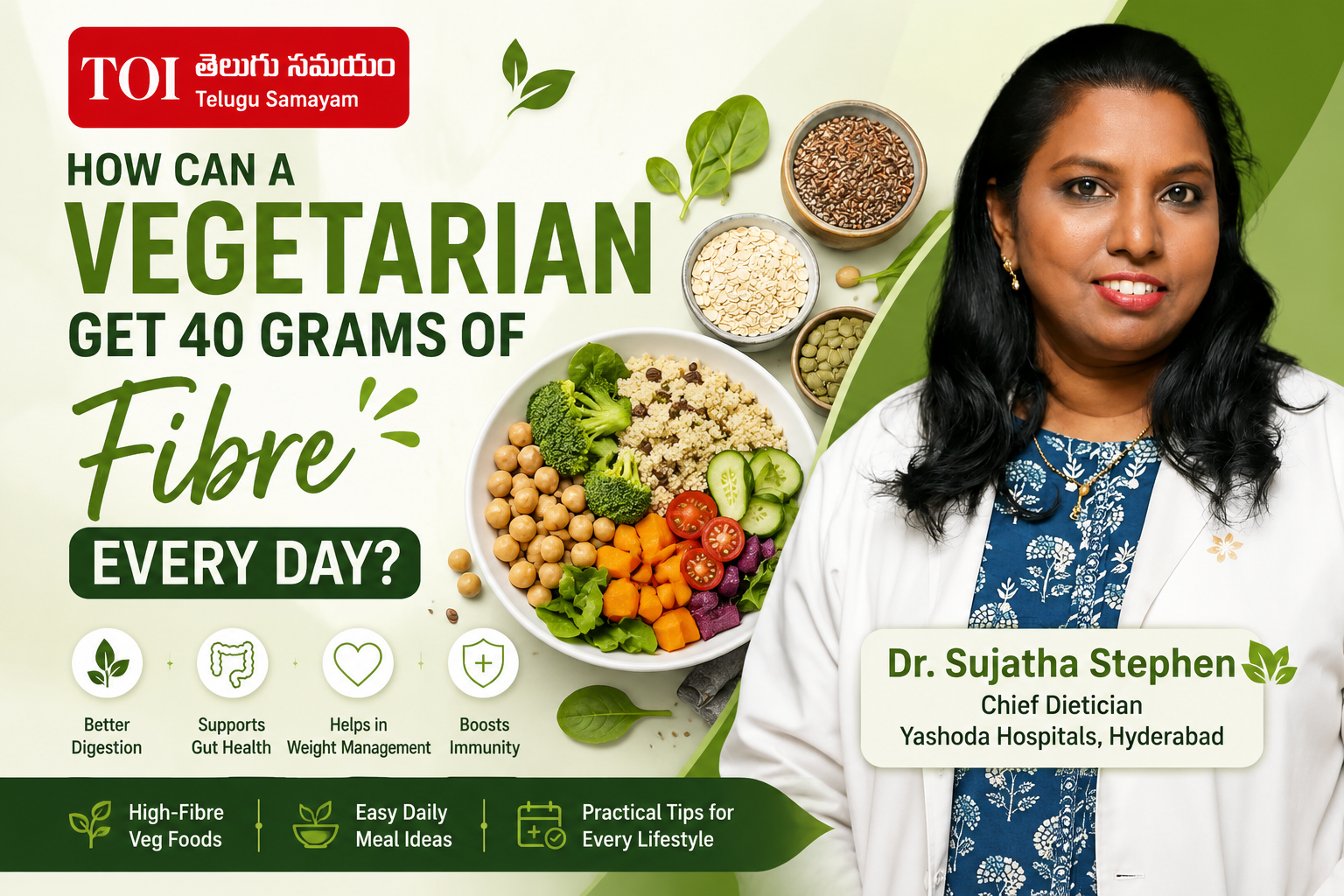
How Can a Vegetarian Get 40 Grams of Fibre Every Day?
How Can a Vegetarian Get 40 Grams of Fibre Every Day?

Publication : Telugu Samayam – TOI
Topic : How Can a Vegetarian Get 40 Grams of Fibre Every Day?
Spokesperson : Dr. Sujatha Stephen, Chief Dietician, Yashoda Hospitals, Hyderabad
A well-planned vegetarian diet can easily provide 40 grams of fibre daily while also supporting heart health, digestion, blood sugar control, and weight management. Fibre is found only in plant-based foods, so vegetarians have an advantage—provided they choose whole, minimally processed foods instead of refined grains and packaged snacks.
Why Is Fibre So Important?
Dietary fibre offers several health benefits:
- Promotes regular bowel movements and prevents constipation.
- Helps control blood sugar by slowing glucose absorption.
- Supports healthy cholesterol levels and reduces the risk of heart disease.
- Keeps you fuller for longer, helping with weight management.
- Nourishes beneficial gut bacteria, which play an important role in digestion, immunity, and overall health.
How to Reach 40 Grams of Fibre
Rather than relying on one food, include fibre-rich foods at every meal.
Breakfast
- Whole grains such as oats or dalia.
- Fresh fruits like apples, pears, berries, or guava.
- Chia seeds, flaxseeds, or a handful of nuts.
Lunch
- Include legumes such as rajma, chickpeas, lentils, or sprouts.
- Choose whole wheat rotis, brown rice, or millets instead of refined grains.
- Add a generous serving of vegetables or leafy greens.
Evening Snack
- Roasted chana, sweet potato, fruits, or a handful of mixed nuts and seeds.
Dinner
- Include dal, beans, tofu, or soy products with vegetables and whole grains.
Don’t Focus Only on Fibre
A healthy vegetarian diet should also provide adequate:
- Protein: Lentils, beans, soy products, dairy, nuts, and seeds.
- Vitamin B12: Fortified foods or supplements, especially for vegans.
- Iron: Lentils, beans, spinach, and whole grains; pair them with vitamin C-rich foods such as citrus fruits or tomatoes to improve absorption.
- Calcium and Vitamin D: Dairy or fortified plant-based alternatives.
- Omega-3 fats: Walnuts, flaxseeds, chia seeds, and soy products.
Increase Fibre Gradually
If your current fibre intake is low, increase it slowly over a few weeks. Drink plenty of water, as increasing fibre without adequate fluids may cause bloating, gas, or constipation.
A vegetarian diet rich in fruits, vegetables, legumes, whole grains, nuts, and seeds can comfortably meet the daily fibre requirement while providing a wide range of nutrients that support long-term health. The key is variety, balance, and choosing whole foods over highly processed vegetarian options.