Constipation Myths and Facts

One type of constipation involves stool that moves too slowly through the large intestine. Another type involves stool that’s dry, hard to pass, and infrequent.
MYTH-Constipation is a disease
FACT-Constipation is a symptom, not a disease.
MYTH- I need to have a bowel movement every day
FACT- Everyone’s bowel habits are different. Some people go several times a day, others only a few times a week.
MYTH–My diet is causing my constipation
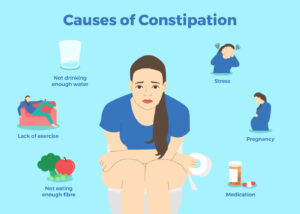
FACT-Yes, your diet may contribute to your constipation, but there are other potential causes for the gastrointestinal symptom.
Your constipation may be caused by:
Use of certain medications (narcotics, diuretics, antacids) irritable bowl syndrome
Slow down in stool movement through your colon
Side effect of a chronic health condition, such as diabetes Lack of physical activity
MYTH- It’s OK to hold it in until I reach my home bathroom
FACT-Holding in your stool worsens constipation.
MYTH- Any high-fber food can help my constipation
FACT- Not all fiber alleviates constipation.
-Fiber is a type of carbohydrate your body can’t digest. There are two primary types, including:
Insoluble fber
Insoluble fiber adds bulk to your stool and helps keep things moving through your digestive tract. Fruits, vegetables, and whole grains are good sources of insoluble fiber.
Soluble fber
Soluble fiber absorbs water as it moves through your digestive tract. Oats, barley, nuts, seeds, and beans are good sources of soluble fiber.
Myth- Less than one bowel movement a day is the definition of chronic constipation:
FACT-The truth is, even 3 bowel movement in a week is normal.
Myth- Chronic constipation is the result of accumulation of toxins in the intestine
FACT-There is no evidence of any correlation between the toxin accumulation and chronic constipation.
Myth- Constipation increases with age
Fact: Constipation does appear to be more common in women and older people but anyone, of any age, can struggle with constipation.
MYTH- You should just eat more fiber to help your constipation.
Fact: For some people, eating more fiber or changing the type of fiber they eat is helpful. For others, it doesn’t help or can even make things worse. Making dietary changes, staying hydrated, and moving more may help.
MYTH-Constipation is only treated with fiber, fluids, and medications.
Fact: Those changes may be helpful, but they’re not the only solutions. physiotherapyTrusted Source or bowel training Trusted Source may help.