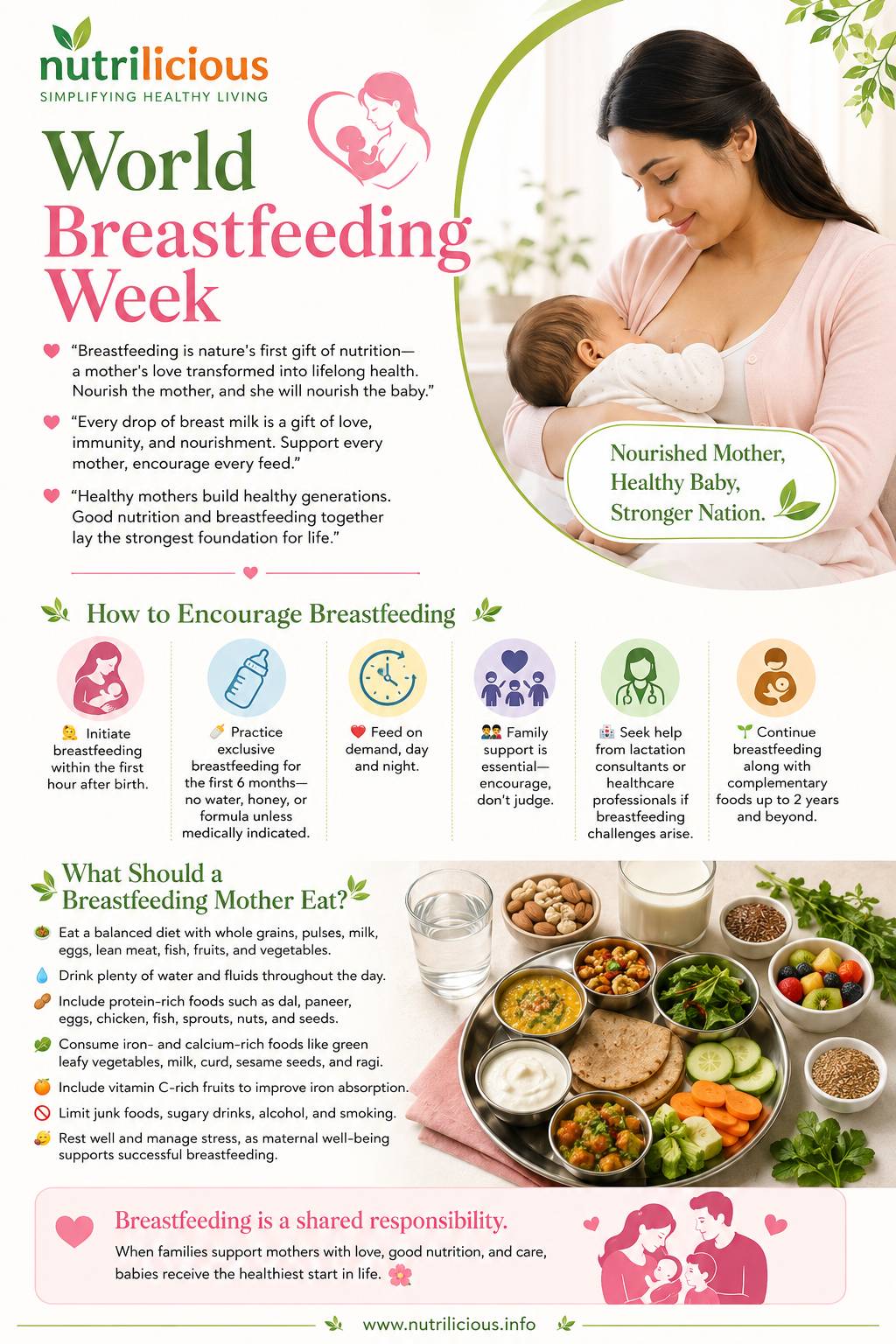
World Breastfeeding Week: Nourishing Mothers, Nurturing Generations

“Breastfeeding is nature’s first gift of nutrition—a mother’s love transformed into lifelong health. Nourish the mother, and she will nourish the baby.”
Every year, World Breastfeeding Week reminds us that breastfeeding is much more than a way to feed a baby. It is a powerful investment in lifelong health, emotional bonding, and a healthier future for families and communities.
Breast milk is a complete, natural food designed specifically for babies. It contains the ideal balance of nutrients, antibodies, enzymes, hormones, and immune factors that help infants grow, develop, and fight infections. Beyond nutrition, breastfeeding strengthens the emotional connection between mother and child and contributes to better physical and mental well-being for both.
Why Breastfeeding Matters
Breastfeeding offers unmatched health benefits for infants and mothers alike.
Benefits for Babies
- Provides complete nutrition for the first six months of life.
- Strengthens the immune system and protects against infections.
- Reduces the risk of diarrhea, pneumonia, allergies, asthma, obesity, and type 2 diabetes later in life.
- Supports healthy brain development and cognitive function.
- Promotes healthy growth and emotional security.
Benefits for Mothers
- Helps the uterus return to its normal size after childbirth.
- Reduces postpartum bleeding.
- Burns extra calories and supports healthy weight loss after delivery.
- Lowers the risk of breast and ovarian cancers.
- May reduce the risk of type 2 diabetes and osteoporosis.
- Strengthens the emotional bond between mother and baby.
How to Encourage Successful Breastfeeding
Breastfeeding is a shared responsibility. Families, healthcare professionals, workplaces, and communities all play an important role.
1. Begin Early
Initiate breastfeeding within the first hour after birth whenever possible. Early feeding helps establish milk production and provides the baby with valuable colostrum, often called “liquid gold.”
2. Exclusive Breastfeeding for Six Months
For the first six months, babies should receive only breast milk, unless medically advised otherwise.
Avoid giving:
- Water
- Honey
- Formula milk
- Herbal drinks
- Animal milk
3. Feed on Demand
Breastfeed whenever the baby shows signs of hunger, both day and night.
Common hunger cues include:
- Rooting
- Hand sucking
- Lip smacking
- Restlessness
4. Family Support Matters
Encourage mothers with kindness rather than criticism.
Partners and family members can:
- Help with household work
- Ensure the mother gets nutritious meals
- Offer emotional support
- Help the mother rest
5. Seek Professional Help
If breastfeeding challenges occur, consult:
- Lactation consultants
- Pediatricians
- Obstetricians
- Trained nurses
Early support can solve most breastfeeding difficulties.
6. Continue Beyond Six Months
After six months:
- Introduce nutritious complementary foods.
- Continue breastfeeding up to 2 years and beyond, as recommended by the World Health Organization.
Nutrition for Breastfeeding Mothers
A healthy mother produces healthy milk. Breastfeeding mothers require additional calories, protein, vitamins, minerals, and fluids.
Eat a Balanced Diet
Include:
- Whole grains
- Millets
- Brown rice
- Oats
- Whole wheat
Protein-Rich Foods
Consume foods such as:
- Dal
- Lentils
- Chickpeas
- Sprouts
- Paneer
- Milk
- Curd
- Eggs
- Fish
- Chicken
- Lean meat
- Nuts
- Seeds
Iron-Rich Foods
- Spinach
- Drumstick leaves
- Amaranth
- Dates
- Raisins
- Sesame seeds
- Ragi
- Beans
Calcium-Rich Foods
- Milk
- Curd
- Cheese
- Paneer
- Sesame seeds
- Ragi
- Green leafy vegetables
Healthy Fruits and Vegetables
Choose colourful seasonal produce to obtain:
- Vitamin A
- Vitamin C
- Folate
- Potassium
- Antioxidants
Vitamin C-rich fruits such as oranges, guava, kiwi, amla, and lemons improve iron absorption.
Healthy Fats
Include:
- Almonds
- Walnuts
- Flaxseeds
- Chia seeds
- Groundnuts
- Fatty fish
Stay Hydrated
Drink plenty of:
- Water
- Buttermilk
- Coconut water
- Soups
- Fresh fruit juices without added sugar
Foods to Limit
Breastfeeding mothers should reduce or avoid:
- Junk foods
- Sugary beverages
- Excess caffeine
- Alcohol
- Smoking and tobacco products
Lifestyle Tips
- Sleep whenever possible.
- Reduce stress through family support.
- Take gentle walks after medical clearance.
- Continue prescribed postnatal supplements.
- Attend regular health check-ups.
Common Breastfeeding Myths
Myth: Small breasts produce less milk.
Fact: Breast size does not determine milk production.
Myth: Babies need water in hot weather.
Fact: Breast milk provides all the hydration a healthy baby needs during the first six months.
Myth: Formula is equal to breast milk.
Fact: No formula can replicate the living antibodies and immune protection found in breast milk.
A Shared Responsibility
Breastfeeding succeeds when mothers are surrounded by encouragement, good nutrition, medical guidance, and family support. Every act of kindness—from preparing a healthy meal to helping with household responsibilities—contributes to a healthier future for both mother and child.
Closing Message
“Every drop of breast milk is a gift of love, immunity, and nourishment. Healthy mothers build healthy generations. When families support mothers with love, good nutrition, and care, babies receive the healthiest start in life. Breastfeeding is not only a mother’s responsibility—it is a shared commitment to building a healthier society.”
Happy World Breastfeeding Week from Nutrilicious – Simplifying Healthy Living.