Thyroid Diet: Expert-Recommended Foods for Better Thyroid Health
Expert Advice by Dt. Sujatha Stephen, RD Chief Dietician, Yashoda Hospitals, Hyderabad

Introduction: Can Diet Help Manage Thyroid Problems?
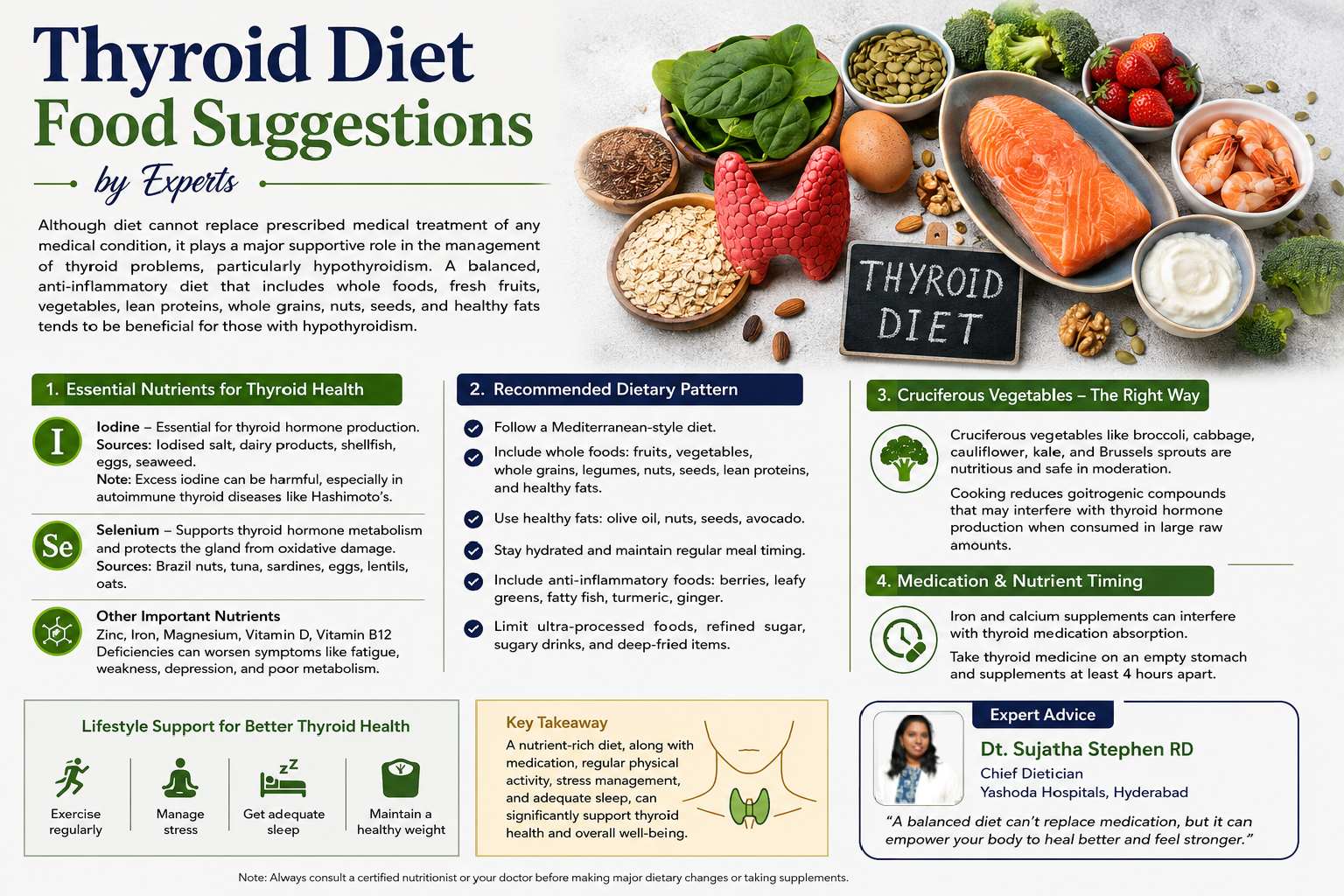
Thyroid disorders, particularly hypothyroidism, can affect metabolism, energy levels, body weight, mood, and overall wellbeing. While diet cannot replace prescribed medication or medical treatment, appropriate nutrition can play an important supportive role in thyroid health.
A well-balanced diet can help provide the nutrients required for thyroid hormone production and metabolism, support overall hormonal health, reduce excessive inflammation, and improve general energy and wellbeing.
For many people with hypothyroidism, a dietary pattern based on whole, minimally processed foods may be beneficial. A Mediterranean-style eating pattern is often considered a suitable model because it emphasizes vegetables, fruits, whole grains, legumes, lean proteins, nuts, seeds, and healthy fats.
However, thyroid nutrition should always be personalized according to the individual’s medical condition, thyroid function tests, medication, nutrient deficiencies, and other health requirements.
1. Essential Nutrients for Thyroid Health
The thyroid gland requires several essential nutrients to produce and metabolize thyroid hormones effectively.
Iodine: Essential for Thyroid Hormone Production
Iodine is an essential mineral required for the production of thyroid hormones, including thyroxine (T4) and triiodothyronine (T3).
Dietary sources of iodine include:
- Iodised salt
- Dairy products
- Eggs
- Shellfish
- Seaweed
However, more iodine is not necessarily better. Excessive iodine intake may be harmful, particularly in people with autoimmune thyroid disorders such as Hashimoto’s thyroiditis.
Therefore, iodine supplements should not be taken without medical supervision.
Key point
Adequate iodine is important, but excessive iodine intake can also negatively affect thyroid health.
Selenium: Supports Thyroid Hormone Metabolism
Selenium is another important mineral for thyroid function. It supports the metabolism of thyroid hormones and helps protect thyroid tissue from oxidative damage.
Food sources of selenium include:
- Brazil nuts
- Tuna
- Sardines
- Eggs
- Lentils
- Oats
Selenium intake should also be balanced. Excessive consumption of selenium supplements can be harmful, so supplementation should be considered only under professional guidance.
2. Other Nutrients Important for Thyroid Health
People with hypothyroidism may sometimes have deficiencies or inadequate intake of several nutrients that are important for energy metabolism and general health.
These may include:
Zinc
Zinc contributes to various metabolic processes and supports normal immune function.
Iron
Iron is important for several physiological processes and may be relevant to thyroid hormone production and metabolism.
Magnesium
Magnesium supports energy production, muscle function, and numerous biochemical reactions in the body.
Vitamin D
Vitamin D plays an important role in bone health and immune regulation.
Vitamin B12
Vitamin B12 is essential for healthy red blood cells and normal neurological function.
Deficiencies in these nutrients may contribute to symptoms such as:
- Fatigue
- Weakness
- Low energy
- Mood changes
- Poor concentration
- Impaired metabolism
However, these symptoms can have many different causes. Therefore, supplementation should ideally be based on appropriate medical evaluation and laboratory testing rather than self-diagnosis.
3. What Should a Thyroid-Friendly Diet Include?
A balanced thyroid-supportive diet should focus primarily on nutrient density and food quality.
Recommended food groups include:
Fresh Vegetables
Include a variety of vegetables to provide fibre, vitamins, minerals, and antioxidants.
Examples include:
- Leafy green vegetables
- Carrots
- Beans
- Pumpkin
- Bell peppers
- Tomatoes
- Other seasonal vegetables
Fresh Fruits
Fruits provide fibre, vitamins, minerals, and naturally occurring antioxidants.
Good choices may include:
- Berries
- Apples
- Oranges
- Guava
- Papaya
- Pomegranate
- Other seasonal fruits
Whole Grains
Whole grains provide complex carbohydrates and dietary fibre.
Examples include:
- Oats
- Brown rice
- Millets
- Whole wheat
- Other minimally processed whole grains
Legumes and Pulses
These are valuable sources of plant-based protein and fibre.
Examples include:
- Lentils
- Chickpeas
- Beans
- Peas
Lean Protein
Adequate protein intake can support general health and metabolism.
Possible sources include:
- Eggs
- Fish
- Lean poultry
- Dairy products
- Lentils
- Beans
Healthy Fats
Healthy fats can be obtained from:
- Nuts
- Seeds
- Avocado
- Olive oil
- Fatty fish
A diet rich in whole foods and healthy fats may also support an overall anti-inflammatory eating pattern.
4. Mediterranean-Style Eating for Hypothyroidism
A Mediterranean-style diet is frequently recommended as a healthy dietary model because it emphasizes:
- Vegetables and fruits
- Whole grains
- Legumes
- Fish
- Nuts and seeds
- Healthy fats
- Minimally processed foods
It also limits:
- Highly processed foods
- Excessive added sugar
- Sugary drinks
- Frequent consumption of deep-fried foods
- Highly processed snacks
The overall principle is simple:
Focus on nutrient-rich foods and reduce the regular consumption of ultra-processed foods.
5. Cruciferous Vegetables: Are Broccoli and Cabbage Safe?
Cruciferous vegetables include:
- Broccoli
- Cabbage
- Cauliflower
- Kale
- Brussels sprouts
These vegetables are highly nutritious and contain fibre, vitamins, minerals, and beneficial plant compounds.
For most people, consuming cruciferous vegetables in normal dietary quantities is generally considered safe.
However, consuming very large amounts of certain cruciferous vegetables raw and regularly may potentially interfere with thyroid hormone production, particularly in people with existing thyroid concerns.
Practical advice
You generally do not need to eliminate these vegetables completely.
Instead:
- Eat them in moderation.
- Include a variety of vegetables.
- Cooking can reduce certain compounds that may interfere with thyroid function.
- Avoid extreme diets based on very large amounts of raw cruciferous vegetables.
The overall dietary pattern is more important than unnecessarily avoiding one healthy food group.
6. Foods to Limit for Better Metabolic Health
A thyroid-supportive diet should also focus on reducing foods that may contribute to poor overall metabolic health and excessive inflammation.
Try to limit frequent consumption of:
- Ultra-processed foods
- Sugary snacks
- Excessive added sugar
- Sugary beverages
- Highly processed packaged foods
- Frequent deep-fried foods
These foods may contribute to excessive calorie intake and may make weight management more difficult for people already experiencing metabolic changes associated with hypothyroidism.
7. Thyroid Medication and Food Timing
People taking thyroid medication should pay particular attention to the timing of certain supplements and foods.
Iron and calcium supplements can interfere with the absorption of thyroid medication.
For this reason, patients should follow the instructions provided by their doctor or qualified nutrition professional regarding:
- The timing of thyroid medication
- Iron supplements
- Calcium supplements
- Other mineral supplements
Patients should not change the timing or dosage of prescribed thyroid medication without medical advice.
8. Supplements: Why Professional Guidance Is Important
Many people assume that taking more vitamins and minerals will automatically improve thyroid health. This is not always true.
Excessive intake of certain nutrients, particularly iodine and selenium, may cause problems.
Before starting supplements, it is better to discuss the need for supplementation with a qualified healthcare professional.
Testing may be recommended when appropriate to identify deficiencies involving nutrients such as:
- Iron
- Vitamin D
- Vitamin B12
- Zinc
- Magnesium
Important reminder
Do not take high-dose supplements simply because you have a thyroid condition.
The correct supplement, dosage, and duration depend on the individual’s medical history and laboratory results.
9. Lifestyle Habits That Support Thyroid Health
Nutrition is only one part of overall health.
People with thyroid disorders may also benefit from maintaining healthy lifestyle habits.
Regular Physical Activity
Exercise can support:
- Muscle strength
- Energy levels
- Cardiovascular health
- Weight management
- Overall metabolic health
The type and intensity of exercise should be appropriate for the individual’s health and fitness level.
Stress Management
Long-term stress can affect overall wellbeing and may worsen feelings of fatigue and poor energy.
Helpful stress-management practices may include:
- Meditation
- Breathing exercises
- Yoga
- Relaxation techniques
- Spending time outdoors
- Maintaining healthy social connections
Adequate Sleep
Poor sleep can negatively affect energy, mood, appetite, and overall wellbeing.
Maintaining a consistent sleep schedule and getting adequate rest is an important part of a healthy lifestyle.
10. A Simple Thyroid-Friendly Plate
A balanced meal can include:
Half the plate
A variety of vegetables and salad, depending on individual tolerance and dietary needs.
One-quarter of the plate
A protein source such as:
- Eggs
- Fish
- Lean poultry
- Lentils
- Beans
One-quarter of the plate
A whole-grain or complex carbohydrate source such as:
- Brown rice
- Oats
- Millets
- Whole wheat
Add a small portion of healthy fat from sources such as nuts, seeds, or healthy oils.
This type of balanced meal can help provide a combination of protein, fibre, vitamins, minerals, and healthy fats.
Expert Takeaway
A healthy diet cannot replace prescribed thyroid medication or medical treatment. However, the right nutritional approach can provide important support for overall health and wellbeing.
A nutrient-rich dietary pattern should focus on:
- Whole and minimally processed foods
- Adequate protein
- Fruits and vegetables
- Whole grains
- Legumes
- Healthy fats
- Adequate but not excessive iodine
- Selenium-rich foods in appropriate amounts
- Identifying and correcting genuine nutrient deficiencies
- Limiting excessive sugar and ultra-processed foods
In addition to appropriate medical treatment, regular physical activity, stress management, adequate sleep, and professional dietary guidance can contribute to better overall health for people living with thyroid disorders.
The best thyroid diet is not a single restrictive food list. It is a balanced, personalised eating pattern that supports the individual’s medical treatment, nutritional needs, lifestyle, and overall wellbeing.
Medical Disclaimer
This article is for general educational purposes only. Dietary requirements differ between individuals and may depend on the type of thyroid disorder, thyroid hormone levels, medication, autoimmune conditions, pregnancy status, and other health factors. Always consult your doctor and a qualified dietitian or nutrition professional before making major dietary changes or starting supplements.
Expert source: Dt. Sujatha Stephen, RD, Chief Dietician, Yashoda Hospitals, Hyderabad.